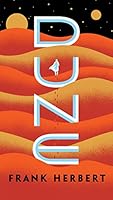
- Author: Frank Herbert
Blog Post
Summary
Set in a distant, feudal future, House Atreides is ordered by the Emperor to take control of Arrakis, a harsh desert planet and the universe’s only source of “spice”—a priceless substance essential for space travel and longevity. Duke Leto Atreides suspects the move is a trap set by his rivals, House Harkonnen, in collusion with the Emperor. Soon after arriving, the Atreides family is betrayed and slaughtered, forcing the Duke’s son, Paul, and his mother, Lady Jessica, to flee into the deep desert.
In the desert, Paul and Jessica are taken in by the Fremen, the planet’s indigenous people, who recognize Paul as a potential messiah. Paul undergoes a transformation as he harnesses his developing prescience and masters the Fremen way of life. He unites the tribes to wage war against the Harkonnens, eventually seizing control of the planet and the spice, fulfilling his destiny and assuming a role of absolute power.
Highlights from Readwise
- “I must not fear. Fear is the mind-killer. Fear is the little-death that brings total obliteration. I will face my fear. I will permit it to pass over me and through me. And when it has gone past I will turn the inner eye to see its path. Where the fear has gone there will be nothing. Only I will remain.” (Location 225)
- “A human can override any nerve in the body.” (Location 253)
- “Hope clouds observation.” (Location 261)
- “Once, men turned their thinking over to machines in the hope that this would set them free. But that only permitted other men with machines to enslave them.” (Location 281)
- “The willow submits to the wind and prospers until one day it is many willows—a wall against the wind. This is the willow’s purpose.” (Location 563)
- world is supported by four things….” She held up four big-knuckled fingers. “…the learning of the wise, the justice of the great, the prayers of the righteous and the valor of the brave. But all of these are as nothing….” She closed her fingers into a fist. “…without a ruler who knows the art of ruling. Make that the science of your tradition!” (Location 629)
- ‘A process cannot be understood by stopping it. Understanding must move with the flow of the process, must join it and flow with it.’ (Location 654)
- I’m the well-trained fruit tree, he thought. Full of well-trained feelings and abilities and all of them grafted onto me—all bearing for someone else to pick. (Location 757)
- Muad’Dib learned rapidly because his first training was in how to learn. And the first lesson of all was the basic trust that he could learn. It is shocking to find how many people do not believe they can learn, and how many more believe learning to be difficult. (Location 1286)
- A plan depends as much upon execution as it does upon concept.” (Location 4165)
- “Fear is the mind-killer. Fear is the little-death that brings total obliteration. I will face my fear. I will permit it to pass over me and through me. And when it has gone past me I will turn to see fear’s path. Where the fear has gone there will be nothing. Only I will remain.” (Location 4275)
- leader, you see, is one of the things that distinguishes a mob from a people. He maintains the level of individuals. Too few individuals, and a people reverts to a mob.” (Location 5424)
- Deep in the human unconscious is a pervasive need for a logical universe that makes sense. But the real universe is always one step beyond logic. (Location 6876)
- “When religion and politics travel in the same cart, the riders believe nothing can stand in their way. Their movement becomes headlong—faster and faster and faster. They put aside all thought of obstacles and forget that a precipice does not show itself to the man in a blind rush until it’s too late.” (Location 7055)
The Hidden Philosophy of Dune
source: https://www.youtube.com/watch?v=KWNHoXulebY (transcription by Gemini)
Transcript: What if I told you that Dune is a masterpiece not just for the story, but for the hidden philosophy that writer Frank Herbert carefully embedded into every single chapter? Herbert spent six years researching the psychology of why humans surrender themselves to charismatic leaders. Once you understand some of the key concepts he folded into the narrative, I guarantee you’ll have a whole new appreciation for this amazing story.
The Intersection of Ecology and Hero Worship
Author Frank Herbert got the idea for Dune while unironically studying sand dunes in 1959. He was assigned to write a magazine article about sand dunes near Florence, Oregon. In a biography written about Frank Herbert by Tim O’Reilly, it reads:
“Herbert became fascinated by sand dunes—the irresistible way they move, swallowing roads, houses, and on occasion entire towns. He saw real drama in the effort to control dunes by planting hardy grasses instead of building walls.”
The article was never published, but Herbert was hooked both on ecology and on sand. Around the same time, Frank became obsessed with hero worship and its oftentimes disastrous effects on mankind. In an article he wrote called Dune Genesis about the inspiration for Dune, he explains:
“I conceived of a long novel—the whole trilogy as one book—about the messianic convulsions that periodically overtake us. Demagogues, fanatics, con-game artists, the innocent and the not-so-innocent bystanders—all were to have a part in the drama. This grows from my theory that superheroes are disastrous for humankind. Even if we find a real hero, whatever or whoever that may be, eventually fallible mortals take over the power structure that always comes into being around such a leader.”
It’s here that these two vastly different subjects—sand dunes and hero worship—became enmeshed in Frank’s mind. He started worrying about ecology being the next frontier for demagogues and power seekers to launch a new crusade. We explicitly see this in the events of Dune. The Fremen have a long-term dream to terraform Arrakis; this is their sacred project, tended by Fremen ecologists for generations before Paul arrives. When Paul shows up, he steps into the messianic role that the Bene Gesserit have already been prepping the Fremen for centuries. Thus, this ecological dream of terraforming Arrakis gets fused with Paul’s messianic identity. He becomes the figure who will lead them to the promised land—the one who will make the deserts bloom.
The Weaponization of Guilt and Righteousness
While reading Herbert’s article about the making of Dune, this line really stood out to me: “Our society operates on guilt.” Herbert’s actual point is that humans often feel guilty about injustices, environmental destruction, and inequality, and that this guilt can be easily weaponized. It’s like the folks who call themselves “social justice warriors” today; even though I personally agree with many of the things they’re fighting for, I can’t deny that the feeling you get when you fight—when you join a crusade, when you march behind a banner—can be dangerous.
There’s a physiological rush to fighting for certain causes. You feel like you’re doing something, like you’re righteous, and that can be extremely dangerous. Frank argues the insidious part is that the adrenaline high of joining the cause can become the actual point, more than solving the underlying problem.
In Dune Genesis, Frank Herbert also writes:
“This, then, was one of my themes for Dune: Don’t give over all of your critical faculties to people in power, no matter how admirable those people may appear to be. Beneath the hero’s facade, you will find a human being who makes human mistakes. Enormous problems arise when human mistakes are made on the grandest scale available to a superhero.”
The Danger of the “Good” Leader
Paul’s father, Leto, is a good man. I remember watching him in Dune: Part One, inspired by how much he cared for his men and feeling devastated when he died. This, Frank Herbert argues, can turn into a problem. It’s not just bad leaders that are dangerous, but good ones too. Good leaders are dangerous because their goodness makes us want to surrender our individual judgment directly to them. They are so genuinely admirable that people around them can stop thinking for themselves and follow them with fanatic loyalty.
In Tim O’Reilly’s biography of Frank Herbert, he writes:
“Feudalism is a natural condition into which men fall—a situation in which some men lead and others, surrendering their responsibility to make their own decisions, follow orders.”
Duke Leto is generous, bold-hearted, and loved fiercely by all who follow him. Even his enemies admire him. A leader such as that would command fanatic loyalty and be difficult to defeat. O’Reilly suggests that Herbert sees feudalism as a psychological tendency humans have naturally. When life is confusing and hard, there’s a relief in letting someone else make the decisions, especially if they’re a good person. It’s not only relief, but it feels like the right thing to do. But the deeper argument Frank is trying to make is that the goodness of the leader is irrelevant to the danger of the dynamic. Why? Because it feels justified to hand over power to these people. It feels righteous.
Ibn Khaldun and Social Cohesion
One of the biggest inspirations for Frank Herbert while writing Dune was Islam, Arabic culture, and Ibn Khaldun, a 14th-century North African historian and sociologist. These influences are obvious not just in the language of the Fremen but in the events of the story. One quote that stood out to me while reading Tim O’Reilly’s book on Frank Herbert was this one:
“In his research, Herbert had noted how the desert seems to be a wellspring of religion. The history of Judaism demonstrates that harsh conditions make for a religion of anticipation, and Islam—which we tend to associate more than any other faith with a desert environment—is perhaps the most messianic religion of all.”
To understand this better, let’s turn to the work of Islamic philosopher Ibn Khaldun. Khaldun was basically the first person to develop a scientific theory of how civilizations rise and fall. His theory is based on a concept called asabiyyah, which basically means social cohesion. This cohesion extends beyond just family or tribe to include a huge number of people. Khaldun argues that large movements or dynasties begin with a strong asabiyyah built on things like hardship or tribal/kinship ties.
Take the United States of America, for instance. This country and the revolution that made it were built on top of immense asabiyyah founded on irritations about taxation without representation. Then, as the state gains power and wealth accumulates, the ruling class becomes increasingly detached from its original base. This erodes asabiyyah over time, leading to the fall of the civilization. Then the cycle repeats as new groups with strong asabiyyah rise to replace the old order.
Khaldun studied this throughout his life, watching the cyclical nature of government in North Africa. He saw how decadent ruling regimes were overthrown at regular intervals by tribal groups and how, over time, the new ruling regimes would reflect the depravity of the regime they displaced. We see this in Dune with the decadence of the Harkonnens and the Empire. They’ve lost their social cohesion after years of being at the top of the pyramid. Then the Fremen, who have immense social cohesion after centuries of hardship, replace them—and end up killing 60 billion people in a holy war. The Fremen become just as bad, if not way worse, than their predecessors.
The Fallacy of the Perfect System
I want to highlight something Frank Herbert wrote that seems controversial on its face but is actually really poignant when you dive deep into what he actually meant. In Dune Genesis, he writes:
“I now believe that no society has ever achieved an absolute pinnacle, that all humans are not created equal. In fact, I believe attempts to create some abstract equalization create a morass of injustices that rebound on the equalizers. Equal justice and equal opportunity are ideals we should seek, but we should recognize that humans administer the ideals and that humans do not have equal ability.”
When he talks of inequality, he’s actually talking about things like judgment, wisdom, and resistance to corruption. The gist of his argument is that when you try to design a “perfect” system—one that tries to provide equal outcomes through systems and institutions—you introduce new injustices because those systems are run by humans who are anything but perfect. Humans have different levels of judgment and wisdom.
Evolution, be it biological, social, or moral, never stops. This means any structure you build is already beginning to decay or transform the moment you finish it. The people who believe they have found the final answer, the perfect system, or the ideal leader are the most dangerous people alive because they’ll enforce their answer on everyone else and stop the adaptation that life requires.
Speaking of adaptation, in Tim O’Reilly’s biography of Frank Herbert, he writes:
“An ecosystem is stable not because it is secure and protected, but because it contains enough diversity that certain organisms will survive despite drastic changes in the environment and other adverse conditions. Strength lies in adaptability, not fixity. Civilization, on the other hand, tries to create and maintain security, which all too frequently crystallizes into an effort to minimize diversity and stop change.”
In Dune: Part One, we see this philosophy reflected in a vision Paul has of Jamis, where he says:
“The mystery of life isn’t a problem to be solved, but a reality to experience. A process that cannot be understood by stopping it. We must move with the flow of the process. We must join it. We must flow with it.”
Language and General Semantics
Frank Herbert believed that humans have a tendency to surrender themselves to a charismatic leader in an uncertain world to feel more in control. In Tim’s book, he writes:
“In Herbert’s terms, religion and its attendant hero worship are human adaptations to uncertainty. Both faith and charismatic leaders spring from a deep hunger for security and meaning in a universe which, as Paul notes, is always one step beyond logic.”
In Dune Genesis, Frank Herbert writes: “The verb ‘to be’ does make idiots of us all.” For example, when we say “X is Y,” or things like “this is the right system” or “this is the truth,” we’re freezing a moving reality into a fixed label. But when reality continues changing, those labels stay still, and then we fight and kill over those labels. The word “is” gives us false certainty about an infinitely uncertain universe.
It’s here that we begin to touch on another huge influence for Frank Herbert: Alfred Korzybski’s “General Semantics,” or the study of how language shapes thought. This is why the Bene Gesserit “Voice” is so central to the plot. Korzybski developed General Semantics in the 1930s with the foundational idea that “the map is not the territory.” Basically, the word for the thing is not the thing itself.
For instance, when you say “the sun rises,” it’s not actually a true statement. The Earth revolves around the sun while rotating on its axis, giving the illusion that the sun is rising, but it isn’t actually doing that. The phrase encodes a completely false model of reality—one where the sun moves and we are stationary—and we use it every day without thinking about it.
Korzybski believed that the gap between the word and reality is where all human conflict, delusion, and misery originates. If you believe a certain type of person is “dangerous” because of a label, you will perceive every individual from that group as dangerous, even if your personal experience tells you otherwise. Another example is how we react to words as if they were physical objects. If someone insults you, you are reacting to sound waves rather than the physical, harmless air pressure that actually hit your ear.
Frank Herbert included this in Dune because of how influential language can be in controlling people. With the Bene Gesserit and the Voice, Frank’s idea was that if language can shape thought in a way we’re not even conscious of, then those who master language can bypass a person’s rational mind and control them directly. The Bene Gesserit’s entire manipulation of the Fremen across generations works through language. They seed prophecies—which are just words—which then shape how the Fremen perceive reality for thousands of years, until the words become so real that an actual human being can step into the “slot” the prophecy created.
Take the word “leader.” When you say someone is a leader, you give them a quality that is now transferable to new situations. But really, if someone is a “leader,” it just means people are following them right now, in this context, for these reasons. It doesn’t mean they will always be a good leader. But when you say “he is a leader,” it implies that leading is part of their identity—that it is who they are. Korzybski’s point was that all language works this way to some degree. Every “is” statement freezes something dynamic into something fixed. We can’t stop doing it—language requires it—but we can become conscious of it. This is what the Bene Gesserit train themselves to do: they learn to hold the word and the reality separately, always aware that the map is not the territory.